
In recent days, information has circulated pointing to a supposed European ban on the connected V16 beacon. These interpretations have raised doubts among drivers about the validity of the obligation in Spain.
However, the regulatory reality is clear: the connected V16 beacon remains mandatory in Spain in 2026 and there is no suspension or repeal in force.
The national regulations remain fully active and compliance is enforceable from January 1, 2026.
What has actually happened with the European Commission?
The origin of the controversy stems from a parliamentary answer from the European Commission indicating that Spain did not formally notify certain Royal Decrees related to the V16 beacon in accordance with Directive (EU) 2015/1535.
This is the only confirmed fact.
The Commission's response does not imply a ban on the V16 beacon or the suspension of Spanish regulations. This is an administrative matter related to the notification procedure for technical regulations between Member States.
Therefore, there is currently no European measure that annuls or halts the Spanish regulations on the connected V16 beacon.
What has NOT happened
It is worth clarifying some points that have caused confusion in various media and social networks. Currently there is no:
- Any European ban on the V16 beacon.
- Any suspension of the obligation in Spain.
- Any repeal of current regulations.
- Any active infringement procedure that has resulted in a regulatory change.
The issue raised by the European Commission refers only to an administrative procedural aspect, not to the substance of the measure or its objective in terms of road safety.
The obligation in Spain remains fully in force
From January 1, 2026, Spanish regulations establish that:
- The connected V16 beacon is the only legal emergency pre-signaling system.
- It definitively replaces traditional emergency triangles.
- Non-connected V16 beacons are no longer valid.
This obligation affects:
- Cars
- Vans
- Buses
- Trucks
In addition, fines of 80 euros are already being applied to drivers who do not have a valid signaling system.
There is no transition period or moratorium. For sanctioning purposes, not having an approved connected beacon is equivalent to not carrying any emergency signaling system.
Can regulations change in the future?
From a legal point of view, any national regulation may be subject to review within the framework of the European Union.
However, an eventual change would require a long and complex process that would include:
- Formal opening of an infringement procedure by the European Commission.
- Period for observations by the Member State.
- Possible referral of the case to the Court of Justice of the European Union.
- A final judgment that would oblige the modification of national regulations.
Currently none of these steps have occurred.
Therefore, the obligation to use connected V16 beacons remains fully in force in Spain.
Requirements that a valid V16 beacon must meet in 2026
For a V16 beacon to be legal in Spain from 2026, it must meet the following requirements:
- Be included in the official list of certified DGT devices.
- Incorporate integrated connectivity and geolocation.
- Transmit the emergency signal to the DGT 3.0 platform when activated.
- Have been certified by an accredited laboratory in accordance with applicable regulations.
These requirements ensure that, when activated, the device not only visually signals the incident, but also digitally communicates the location of the stopped vehicle to traffic management systems.
Hero Driver LED: certified connected V16 beacon
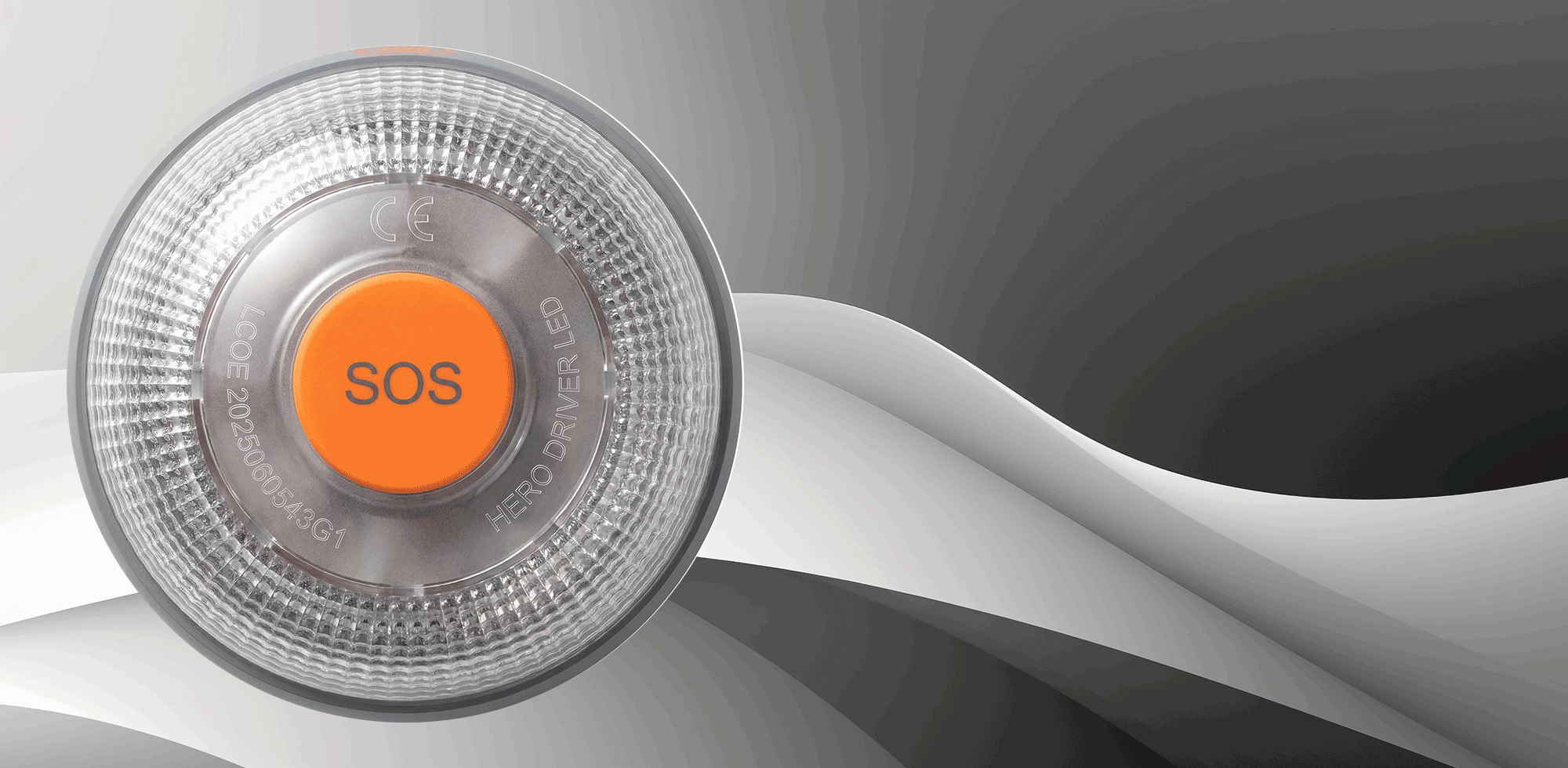
Among the available solutions, Hero Driver LED is a certified connected V16 beacon included in the official list of devices authorized by the DGT.
The device integrates NB-IoT connectivity with Vodafone included until 2040, which allows it to automatically transmit the emergency signal to the DGT 3.0 platform when activated.
Its main features include:
- 360° visible luminous signaling.
- Simple activation by push button.
- Integrated geolocation.
- Connectivity included without additional fees until 2040.
- Certification in accordance with current regulations.
Thanks to these features, the beacon allows both nearby drivers and traffic management systems to be alerted, improving safety in emergency situations.